
Introduction
I was suffering from many ailments such as severe migraine, severe asthma, hypertension, and later depression. I learned that meditation would resolve all health issues; therefore, I practiced Transcendental Meditation religiously for 2 years, but I did not find much improvement. I searched for a more effective meditation. Earlier in my life, I learned about an ancient Indian meditation practice that could completely transform a person and cure diseases. Indian Rishis lived healthy, extra-long lives through this meditation, called Yog. Therefore, I started searching for literature on ancient meditation. Finally, I found a book, a commentary on the Patanjali Yoga Sutra (PYS), an ancient and authentic treatise on meditation, written by Swami Vivekananda, a monk and renowned Vedic scholar who introduced Vedanta and meditation to the West at the Parliament of Religion in Chicago in 1893. In fact, seers in ancient India practiced meditation thousands of years before Buddhism emerged. The Guru-Shishya (teacher-disciple) tradition taught meditation, but it ended after foreign invasions of India, and the ancient practice went extinct. Fortunately, ancient meditation survives in the form of PYS, a compilation of 196 sutras arranged in four chapters. These aphorisms are so brief that they offer little practical guidance. As a result, PYS remained obscure for a thousand years, though yoga schools in India now teach it as meditation theory without applying it.
Later, I realized from my past experience that something was missing from TM, which made it less effective. To find what was missing, I needed to decode PYS’s aphorisms. To do this, I studied Vedanta and other ancient literature, and I kept practicing what I learned from PYS and Vedanta. Slowly, I decoded PYS’s aphorisms and revived the ancient practice of meditation. A major difference is that while Rishi Patanjali explained meditation through Sankhya philosophy, I found that Vedanta explains meditation more accurately, which helped me develop a science of meditation. After practicing meditation according to PYS, which I called Yog meditation, I found considerable improvement after three months; my depression was gone, and I stopped the medicines prescribed by the psychiatrist. Later, my decade-old problems, severe migraine, severe asthma, and repeated infections were also cured. I was full of energy and felt high the whole day. This drastic improvement in my health within three months of practice made me wonder how meditation could bring these changes. This sparked the scientist in me to dive deep into how meditation affects human physiology and, through this path, the science of meditation. For the last two decades, I mostly worked on engineering projects and wanted to return to Physics. I was thrilled with the idea of developing the science of meditation. I had already explored meditation’s potential to overcome mankind’s suffering, and I realized that science alone could bring it to the masses. I had found my life’s goal and decided to dedicate my life to it. My research institute refused to fund it, arguing it wasn’t a scientific project. My confidence was boosted so much that I made a bold decision. I started a pizza restaurant for my wife, one of a kind in India, because Pizza Hut and Domino’s hadn’t entered the Indian market, and the business was an immediate success, giving me the funds I needed for research.
After reviewing the meditation research, I found that many papers have been published, and the field has established itself because of strong public interest. Still, this emerging field faces the following key issues.
(1) There is no universally accepted operational definition of meditation, because of which the field has become disorganized. People propose ideas about focusing the mind and creating new forms of meditation. According to a report, about 309 different types of meditation exist; it is like using the word ‘sport’ to refer to all sports, even though they may be entirely different. Because of this chaos, science cannot study meditation properly.
(2) According to an article published in Perspective of Psychological Science, prominent psychologists and cognitive scientists caution that, despite popularity and supposed benefits, scientific data on meditation is greatly lacking. A report published in JAMA Internal Medicine found no evidence that meditation programs were superior to active treatments such as drugs, exercise, and other behavioral therapies. Most studies agree that meditation practice provides only temporary peace of mind and modest improvement in anxiety, depression, and pain.
(3) Meditation, originally, is a profound, thousands-of-years-old contemplative tradition with an ethical and philosophical foundation that needs years to learn. Modern meditation has been oversimplified, and it can be learned in a few days. Obviously, much is missing, which greatly reduces meditation’s effectiveness.
(4) After many decades of research, meditation is still lacking a scientific foundation. We need a robust theory of meditation, tools to monitor the mind’s state during practice, and ways to assess progress.
(5) Meditation is fundamentally a spiritual practice, but spirituality is altogether missing from the practice. Atheists and agnostics also practice meditation. Spirituality is the soul of meditation; without it, the practice is incomplete and reduces to a mental exercise that temporarily calms the mind and provides modest health benefits.
Beyond meditation research, I found that a new field, Consciousness Research, has recently emerged through the efforts of Francis Crick, a Nobel laureate who discovered the helical structure of DNA. After reviewing the research, I found that it rests on the assumption that consciousness is a physical entity that emerges from a complex network of neurons and can be measured empirically. This assumption drew worldwide criticism because, for centuries, philosophy and spirituality have treated consciousness as fundamental. From a physics perspective, I found this assumption flawed, and I believe consciousness research can be an integral part of meditation research.
Beginning of the Science of Meditation
During meditation, I discovered a fascinating physiological effect of Yog meditation, which laid the foundation for the science of meditation. As meditation progressed, I noticed my breathing slowing steadily, with shorter inhalations. After about 20 years of practice, I attained an advanced stage of meditation, Samadhi, a state of intense mental focus in which the mind becomes thoughtless. During Samadhi, inhalation became zero. This kind of breathing is also referred to as Sutra 1.34 of the PYS, which translates as “throwing out and retention of breath.” This means breathing consists only of exhalation and breath retention, and this kind of breathing is called Yogic breathing. I developed specific instruments to record Yogic breathing, which are described in detail later. I found that the body-attached pulse oximeter showed oxygen saturation within the normal range. Because oxygen saturation remained normal without inhaling environmental oxygen, I concluded that during Samadhi the body generates its own oxygen, eliminating the need for environmental oxygen. I also confirmed this with an experiment, which I discuss in detail later.
Physiological effects of meditation have also been reported earlier: Wallace found that oxygen consumption during Transcendental meditation decreased slightly but significantly. The Indian Journal of Medical Research published a report about a Yogi named Ramanand who claimed to have spent 28 days in a sealed underground pit. Yogi Ramanand’s feat suggests that the body’s oxygen consumption approaches zero in the very advanced stages of meditation. Ramanand’s feat was inspired by an ancient tradition in which yogis meditated for days in sealed underground pits. Different kinds of meditation produce different physiological effects. Practitioners of Tibetan Buddhist meditation practice known as g Tum-mo demonstrated a physiological effect in which the temperature of their fingers and toes increased by 8.30 °C. Another yogi, Satyamurti, performed a feat in which he stopped his heartbeat for a sufficient length of time. His heart rate surged to 250 beats/min before ceasing.
Experimental set-up for recording Yogic breathing
Fig. 2 shows the sensors and instruments developed to record Yogic breathing.
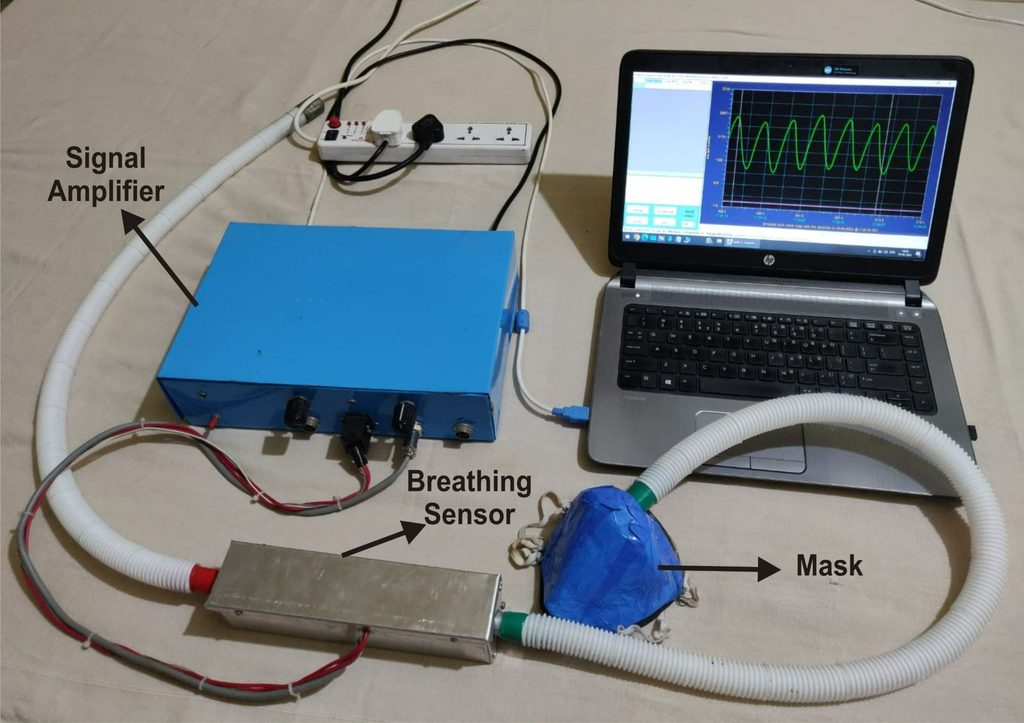
Fig.2. Experimental setup for recording breathing.
Fig. 3 shows the breathing sensor schematic.
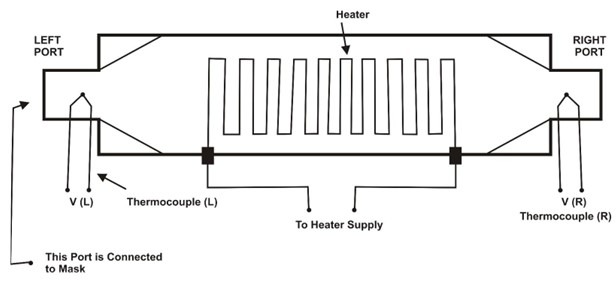
Fig. 3. Breathing sensor schematic. During exhalation, gas flows from left to right through the heater, increasing the right thermocouple temperature while the left thermocouple remains at body temperature. If VR is the voltage across the right thermocouple and VL is the voltage across the left thermocouple, then VR > VL, so VR – VL is positive; exhalation causes a positive swing in the breathing pattern. During inhalation, gas flows from right to left, so the left thermocouple is hotter than the right. Therefore, VR < VL implies that VR – VL is negative, causing a negative swing in the breathing pattern.
Fig. 4 depicts a normal breathing signal, where the positive half-cycle (positive swing) represents exhalation and the negative half-cycle corresponds to inhalation. It shows that the area under the positive half-cycle equals the area under the negative half-cycle, implying that during normal breathing, the volume of air exhaled equals the volume inhaled.
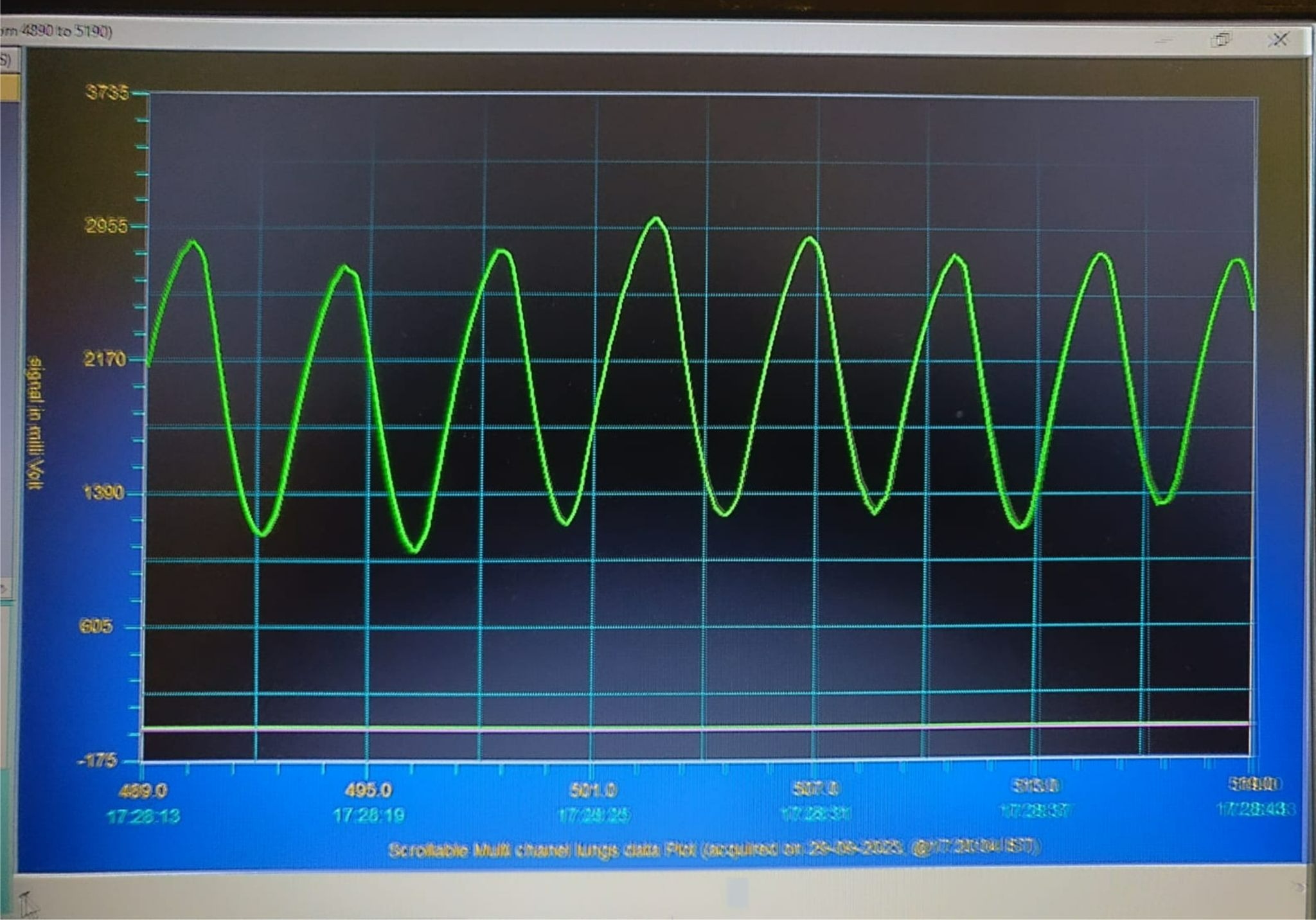
Fig.4. Photograph of laptop screen showing normal breathing signal
Fig. 5. Shows the Yogic breathing signal during Samadhi. The negative half-cycle disappears, indicating that inhalation has ceased, and the positive half-cycle repeats after a resting period. The resting period matches the retention period, during which oxygen is generated.
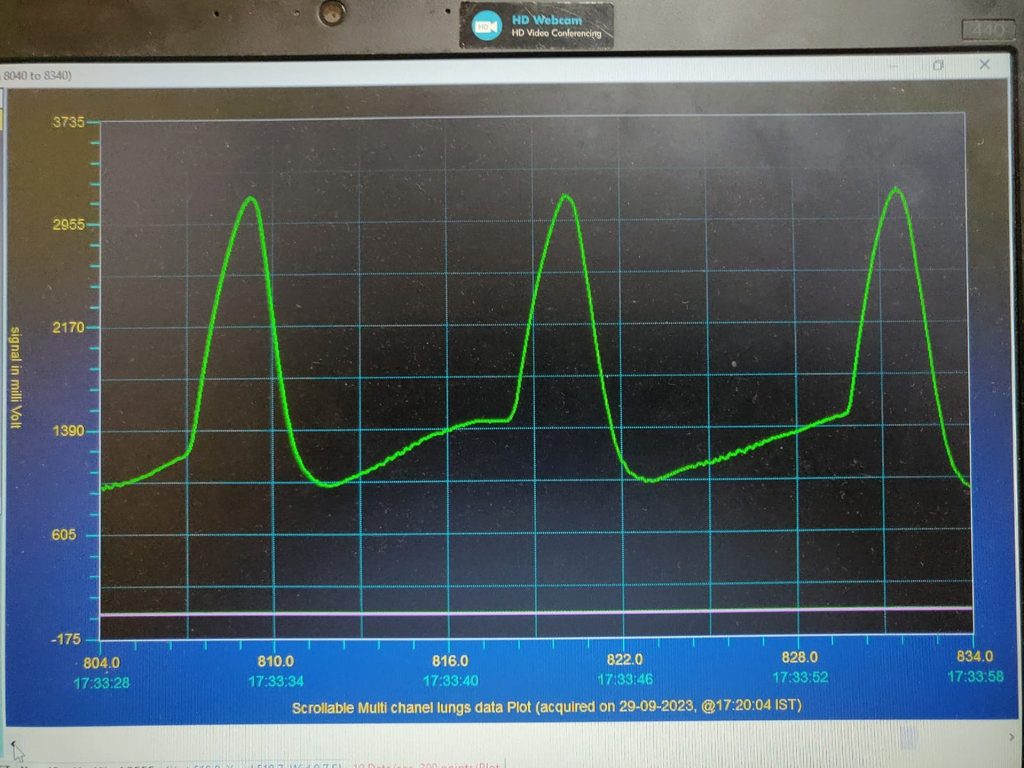
Fig.5. Photograph of laptop screen showing Yogic breathing
Live transition from normal breathing to Yogic breathing is seen in a video that can be accessed from the following link:
Cessation of inhalation implies that the body generates oxygen during Samadhi, eliminating the need to take oxygen from the environment. During Samadhi, the body produces oxygen through a physiological process, allowing survival without environmental oxygen. Yogi Ramanand survived in a sealed underground pit without oxygen because of this physiological effect. To further confirm this, another experiment was conducted: the Samadhi Experiment.
Samadhi Experiment
Fig. 6 shows the experiment’s schematic, and Fig. 7 shows the actual experimental setup.
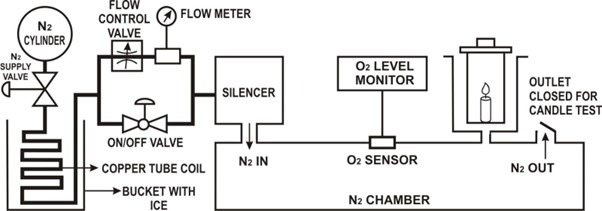
Fig.6. Schematic Diagram of the Samadhi Experiment.
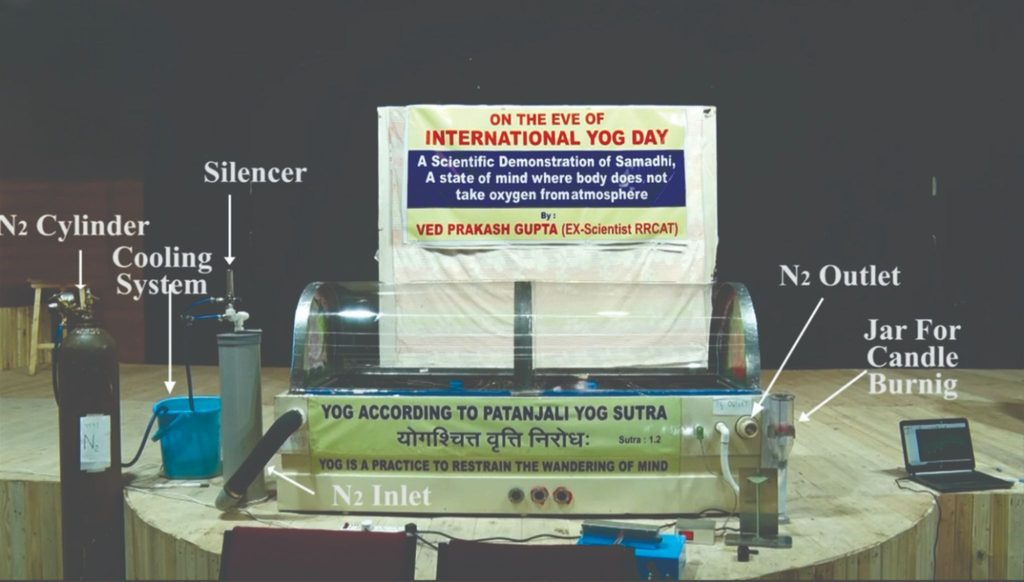
Fig.7. Actual experimental setup of the Samadhi experiment
A sealed underground pit environment was created by designing a zero-oxygen chamber. The oxygen was removed by filling the chamber with pure nitrogen gas. There are two ways to fill the chamber with nitrogen gas. The direct path uses a fully open valve to release gas at maximum flow, replacing the chamber’s oxygen with nitrogen in a couple of minutes. We monitor the chamber’s oxygen level using an ASAIR AO-07 medical oxygen sensor. When the chamber oxygen level reaches zero, the valve closes fully, and gas then passes through a second path containing a flowmeter and controller. We set a flow rate of 50 liters/min to maintain positive nitrogen pressure in the chamber. This prevents air leakage into the chamber, keeping the chamber’s oxygen level at zero. In addition to the oxygen sensor, we also confirmed that the chamber’s oxygen content was zero by passing the outgoing gas through a jar containing a burning candle. The candle goes out, confirming that no oxygen is present in the jar. The silencer, a noise suppressor, is used because the nitrogen gas in the cylinder is under very high pressure and, when released, produces a loud sound that can be distracting. Nitrogen gas passes through multiple layers of glass wool sheets arranged in the silencer’s cylinder to filter the sound. Before releasing the gas into the chamber, the author reduced its temperature by passing it through a copper tube coil immersed in an ice-filled bucket. This arrangement lowered the chamber temperature to a comfortable level, as the ambient temperature was high in June. To begin the experiment, the author wore a Bluetooth-enabled HealthTree pulse oximeter to view the reading on a remote mobile phone screen. The author used a second mobile phone as a timer. A third mobile phone recorded video of all experimental parameters: the oxygen level monitor reading, pulse oximeter, and timer.
I entered the chamber, and nitrogen gas filled it to remove oxygen completely. I comfortably spent 30 minutes in the oxygen-free chamber. I was fully conscious and responding to people around the chamber. The experiment took place during a press conference on the eve of International Yoga Day 2023 to demonstrate this spiritual phenomenon and the extraordinary effect of Yog meditation. Journalists from print and electronic media, 4 senior scientists, and a nationally renowned yoga expert attended the press conference to witness the experiment. The video of the experiment can be accessed from the link;
and the video of the parameters can be accessed from the link;
;https://youtu.be/UaO_mYN52y8?si=_d_opGlb7AzMSx8k
The video shows that the oxygen level inside the chamber remains at zero for 30 minutes. The pulse oximeter shows that blood oxygen saturation stayed between 94 and 97 most of the time, within the normal range for a healthy person. Short-range, random fluctuations in the oximeter reading are inherent to the device. A longer-range fluctuation down to 82 occurred because the crowd’s noise distracted the mind. The author also did exercises that raised his legs and hands, which increased oxygen consumption; his blood oxygen level fell briefly but soon recovered. This experiment empirically showed that the body generates oxygen during Samadhi. The press conference limited the nitrogen chamber stay to 30 minutes. Since the body generates oxygen and blood oxygen saturation did not fall, theoretically there is no limit to how long someone can stay in the nitrogen chamber. The following are links to media reports:
Discussion on the results of the experiment
Observing changes in breathing signals during Samadhi, along with the Samadhi experiment, confirms that the body generates oxygen in a focused state of mind. Oxygen is not generated only during Samadhi, that is, when the mind is thoughtless; oxygen generation begins when the practitioner starts to control distractions and the mind begins to focus. This explains why the breathing slows down in other meditations, which may be considered a preliminary stage of Yog meditation. As the practice advances, oxygen generation increases as mental focus deepens. The following figure (Fig. 3) shows how oxygen generation modifies the breathing signal.
.
Fig. 3(a) shows the normal breathing pattern, where the area under the exhalation curve equals the area under the inhalation curve, implying that the amounts exhaled and inhaled are equal and that no oxygen is generated. The first stage of Yog meditation corresponds to a lower level of mind focus; Fig. 3 (b) depicts the breathing pattern during this stage. A small, flat portion of the breathing pattern is the resting period, during which oxygen is generated, thereby reducing the area under the inhalation curve. The second stage of Yog meditation corresponds to a higher level of mental focus, and Fig. 3 (c) shows the breathing pattern in this stage, indicating a longer resting period and increased oxygen production, thereby further reducing the need for inhalation. During the final stage of Yog meditation, i.e., Samadhi, the mind’s concentration intensifies greatly. This resting time becomes the retention period, the duration of the mind’s focus and oxygen generation, which becomes so long that environmental oxygen is no longer needed and inhalation becomes zero.
Yog meditation consistently increases mental concentration, suggesting it can be quantified. Thus, the physiological effect accompanies a subjective experience of mental focus with an objective parameter. The intensity of the mind’s focus during meditation can be measured by monitoring oxygen production, which increases as the focus deepens. Because directly monitoring oxygen production in the body can be cumbersome, the algorithm uses the area under the inhalation curve as a proxy for oxygen production to estimate focus intensity.
Understanding Yog meditation
Yog meditation is based on an ancient text, the Patanjali Yoga Sutra; this section briefly describes it to give an idea of the practice and how it differs from today’s meditations. Sutra 1.2, the second sutra of chapter 1, defines Yog meditation as restraining the mind’s disturbances, such as involuntary thoughts and emotions arising from life’s problems, that distract the mind. This Sutra also defines the goal of Yog meditation: restraining the mind’s disturbances is equivalent to controlling the mind; thus, the goal is to develop control over the mind. Sutras 1.5 to 1.11 discuss various kinds of thoughts that may distract the mind during the practice. Yog meditation centers on controlling the mind’s distractions; therefore, many Sutras explain how to inhibit involuntary thoughts and attain a thoughtless state of mind. Among these, Sutra 2.29 is of prime importance, which discusses eight mandatory components of the practice of Yog meditation: (1) Yama, which means to abstain from immoral, illegal, and unethical acts and not to think of harming others in any way: when a person is involved in such activities, his mind thinks to escape from the consequences, a big hindrance to the practice. (2) Niyama means to instill self-discipline and purify the mind and body: Mind purification is eliminating negative thoughts, and body purification is keeping the body free of diseases and ailments that may hinder the practice. (3) Asana means a proper posture for the practice: Sutras suggest any comfortable and stable posture in which the practice can be done for a longer time without distractions. It does not recommend any particular posture. (4) Pranayam means to attempt to fix attention on the breathing. In yoga, this term refers to breathing exercises. (5) Pratyahara means to develop control over the sense organs so that disturbances in the environment do not distract the mind. (6) Dharana stands for a proper object to concentrate upon. (7) Dhyan is the process of fixing attention on the object, mostly breathing. (8) Samadhi means a state of unwavering focus of the mind. At this stage, all mental distractions are inhibited, resulting in a thoughtless state of mind. It is complete control over the mind. With no thoughts, it is ultimate inner peace. In spiritual literature, Samadhi is also called a state of pure consciousness because, without thoughts, only consciousness remains. It is also known as a state of Self-realization. Samadhi also serves as a technical term in PYS to denote a progressive stage of meditation, with specific names. For example, Sabeej Samprajnata Samadhi is the lowest Samadhi, a stage in which the mind’s focus is not yet sufficiently developed, and wandering thoughts have subsided but not completely stopped. It is followed by many different Samadhis, corresponding to increasing mental focus. In the highest Samadhi, the mind’s focus is so intense that no distracting thoughts remain, and it effortlessly stays thoughtless. The person remains calm and non-reactive even in the worst possible life conditions. This Samadhi is called Nirbeej Asamprajnata Samadhi.
Five of the eight components of Yog meditation discussed above are preparatory steps to minimize mind distraction, while the last three are practice steps. In Yog meditation, the practitioner always remains in a meditative mood; unlike today’s meditations, which recommend sitting for twenty or thirty minutes, he focuses fully on whatever he does. This also brings perfection to his work. When the mind fills with negative thoughts after stressful situations in daily life, sutra 2.33 explains how to restrain them and restore the mind’s calm. A technique developed from this sutra is the Cognitive Feedback Technique (CFT), which replaces a negative thought with a positive one: a negative thought distracts the mind, while a positive one stills it. It is similar to Cognitive Behavioral Therapy, or CBT, which is applied to help people come out of trauma and many psychological problems.
According to PYS, spirituality plays an instrumental role in inhibiting mental distraction. Yog Sutra 1.23 emphasizes unwavering faith and devotion to Ishwara, the Nature God. The mind’s distraction stems from life’s problems, and the sutra teaches that one should leave these problems to God and avoid thinking about them. Spirituality centers on God and can be understood through Yog meditation. According to Vedic philosophy, Brahman or Ishwara, the Nature God, is an infinitely intelligent operating system believed to have created and to run the universe according to the laws of nature (which also happen to be the laws of science). Ishwara may also be equated to Spinoza’s God, as Einstein believed. Yog meditation is a practice for first-hand experience of God in the state of Self-realization. The author lost faith after studying Physics but became a devout spiritualist after practicing Yog meditation. With the entry of God, Yog meditation may seem non-secular. In fact, Yog meditation is spiritual meditation, and a secular person can also be spiritual: we need to understand the difference between spirituality and religion. Religions have different concepts of God, such as a personal God, like Allah in Islam and God in Christianity, who, according to these religions’ scriptures, created the universe with His magical powers and runs it. Followers are made to believe in their Gods through fear, social pressure, and stories from scriptures. On the other hand, a spiritual person explores God and believes in Him based on his experiences. Meditation began in ancient times as a spiritual practice for exploring God.
Despite the significant difference between the concepts of a religious God and a Nature God (a spiritual God), both religious and spiritual people cope with stress equally and feel an enviable calm by surrendering to God, because belief matters. By contrast, after a catastrophe, an atheist or agnostic person may keep thinking about the situation without reaching a conclusion, losing peace of mind.
According to Sutra 1.12, Non-attachment plays a significant role in restraining the mind’s distractions. Religion often misinterprets it as renouncing worldly life and retreating to monasteries or caves to minimize distractions. Vedic philosophy condemns renunciation and insists on practicing meditation while fulfilling responsibilities to family and society. It suggests balancing worldly and spiritual life by prioritizing needs over desires, since desires have no end. Abraham Maslow’s hierarchy of needs suggests that needs are limited, and once satisfied, the mind is no longer distracted. Non-attachment is elaborated in Vedic philosophy further as the detachment from five so-called mental distortions: (1) Kama, unethical and immoral desires, (2) Krodha, anger, (3) Lobha, greediness, (4) Moha, unreasonable attachment, (5) Ahankara, Ego, the belief that I am only right. Psychology considers these normal in human behavior, but in spirituality they are the enemies of meditation because they cause mental distraction and must be conquered through Yog meditation. One does not need to be non-attached to start meditation; rather, the practice cultivates non-attachment.
Science of Yog Meditation
To understand oxygen generation during Samadhi, I studied Neuroscience to understand how the brain works. I was shocked to learn that Neuroscience does not accept the existence of the mind and, according to it, nothing exists beyond the complex network of neurons. Another challenge was establishing the mind’s existence. Therefore, I studied Neurophilosophy, Physiology, Molecular Cell Biology, Psychology, and Philosophy to understand the mind’s nature and its relationship to the brain. My extensive experience as an electronic engineer designing various control circuits has helped me understand neural circuits and brain function; after all, the brain is also a control system. I gained important insights into the nature of the mind from René Descartes’s Meditations on First Philosophy and his work on the Mind-Body problem. I studied Vedic literature, an ancient spiritual science that offers an elaborate description of the mind. I found that many philosophers and renowned psychologists, such as Freud and Carl Jung, have discussed the mind. Max Planck and many great scientists believed that new ideas emerge from the mind, not the brain. These studies gave me confidence and a foundation for exploring the mind’s nature and function. After all, the mind is the only link between the physical science and spirituality. After 25 years of thought, I have developed a theory of the mind deeply rooted in the fundamental laws of Physics. I have written a 500-page book on this research titled “An Introduction to Yog Science with Theory of Mind and Atman,” and it is currently undergoing editing. Yog science may also be called the ‘Science of Meditation’ or the ‘Spiritual Science’. I developed this science alongside meditation to understand my experiences during meditation, and it greatly helped me reach higher stages without a human Guru. It is a fusion of neuroscience and Vedanta. It can also be seen as a unification of science and spirituality: both complementary, as the brain and mind are, proving Max Planck’s quote, father of Quantum physics: “There can never be any real opposition between religion and science; for the one is the complement of the other…”
What is the mind?
In 1983, Joseph Levine coined the term ‘Explanatory Gaps’ in contexts where brain activity does not explain conscious subjective experience. Later, the mind, consciousness, dark matter, and other unexplained astronomical phenomena were also included. Now, I also include oxygen generation in the brain during Samadhi. During meditation, I learned that Physics is missing something fundamental that explains these gaps. Later, I discovered a new dimension of Physics grounded in fundamental laws that explains the nature of the mind, how it becomes thoughtless during Samadhi, and how it generates oxygen. It explains consciousness, dark matter, and brain function, leaving no explanatory gaps.
This new dimension of Physics proposes that the mind is made of a new kind of matter and explains its atomic structure the same way atomic Physics explains matter’s atomic structure. Mind-matter concentrates when the mind focuses during meditation. Freud has described the mind as a form of mental energy that activates a set of neurons, giving rise to mental activity. Normally, mental energy (mind-matter) is not focused; it is distributed throughout the brain, activating neurons as needed. When mind-matter is distributed over the cerebral cortex, it activates thought-generating neurons, producing involuntary thoughts. During meditation, when the mind is focused, mental energy concentrates in a smaller area of the cerebral cortex, activating fewer thought-generating neurons and stilling the mind. During Samadhi, the mind’s focus is intense, concentrating mental energy in the empty region of the cerebral cortex: only a small portion of the cerebral cortex is utilized in a lifetime, and a large portion remains unused; its neurons have no stored information. When mental energy activates neurons in this region, it generates no thoughts, and the mind becomes thoughtless.
The description above reflects René Descartes’ scientific interpretation of the mind. He proposed the nature of the mind as follows: (1) The mind is made of matter of a different kind. (2) Mind-matter is different from physical matter in the sense that Physics can explain matter, but not the mind. (3) Scientific equipment can interact with physical matter but not with mind-matter. (4) The brain exists in physical space, but the mind does not. Brain matter has a measurable boundary. This is not true of the mind. (5) The mind is a necessary whole which cannot be divided like physical matter. (6) The mind experiences sensations that cannot be explained by Physics.
Neuroscience is not equipped to offer the science of meditation because the term ‘mind’ does not exist in neuroscience. Most neuroscientists have a physicalist mindset, believing that nothing exists beyond the brain’s complex structure; consciousness, thoughts, emotions, and the ability to focus attention emerge from it. In fact, imaging techniques cannot reveal the mind, so they deny its existence and rely solely on instruments for their research. They use the word ‘brain’ when they should use ‘mind’. The physiological effect demonstrated in the Samadhi experiment clearly establishes the mind’s existence as an entity distinct from the brain. In the Samadhi experiment, the brain generates oxygen when the mind is focused, providing scientific evidence of the mind’s existence. In neuroscience, the brain itself is the mind. Focusing means concentrating in a smaller space, so it is not clear how the brain can be focused, since it is a solid structure. If the mind is the same as the brain, then ceasing thought generation during Samadhi would mean the brain has stopped working, which is not possible, since consciousness remains. Focusing the mind is a real, well-established mental action. Psychology also discusses the benefits of doing a task with a focused mind. From the above discussion, it follows that the mind exists independently of the brain and can meditate.
Meditation vs Yog meditation
(1) There is no universally accepted definition of meditation, while the definition and goals of Yog meditation are very well defined.
(2) There is no universally accepted methodology; a Mindfulness journal study lists 309 different ways of meditation. Meditation is like using the word ‘sport’ to refer to all sports, even though they may be entirely different. Yog meditation is strictly practiced as described in PYS. It is mandatory to follow the Eight-Limb path described in PYS.
(3) Meditation does not control the thought process; it only subsides the thoughts, relaxing the mind temporarily. Yog meditation controls thoughts to the extent that the mind becomes thoughtless, a state of absolute peace, and it is permanent.
(4) Meditation does not cure diseases; it only marginally improves the condition. Yog meditation has the potential to cure chronic diseases, especially those resulting from stress and anxiety, by eradicating the root cause.
(5) Meditation marginally improves the concentration of the mind because the distractions of the mind are not controlled. It is normally practiced to relax the mind. Yog meditation drastically improves the mind’s concentration, enabling a person to complete a task perfectly with minimal fatigue. Mental fatigue results from a lack of oxygen needed to produce ATP, the energy currency of neural activity. Since oxygen is produced within the brain, ATP production continues, delaying fatigue.
(6) Since the mind remains thoughtless and relaxed in Yog meditation, it increases creativity, and the mind suggests solutions to problems quickly. A thoughtless person always lives in the present.
(7) Yog meditation does not demand abandoning worldly life and going to the caves or monasteries for the practice to keep away from the stress of life, to attain higher stages of meditation; a tradition of the monks. Yog meditation prepares the mind to cope with stress. In fact, when the mind wanders, it searches for solutions to life’s problems. When auto-suggestion suggests a solution, the mind stops wandering. In this way, Yog meditation prepares us to face life’s problems and paves the way for success.
(8) Yog meditation transforms a normal person into a ‘fully functional person,’ conceptualized by Carl Rogers, by exploring and utilizing the full potential of the mind, greatly boosting confidence, energy, creativity, dedication, and the focus of the mind.
(9) Yog meditation inculcates non-attachment, thereby making a person more flexible. We are strongly attached to our thoughts and not willing to change them. Our habits result from attachment. Yog meditation weakens this attachment, making it easier to let go of negative thoughts and bad habits and replace them with new, positive ones. One can easily fulfill the resolutions by practicing Yog meditation.
(10) Oxygen generated during Yog meditation (Yogic oxygen) plays an instrumental role in the remission of chronic diseases. When the body generates Yogic oxygen, the load on the lungs and heart to supply oxygen from the environment is drastically reduced, rejuvenating them and curing asthma and cardiac problems. I have permanently cured my severe asthma and cardiac problems through the practice of Yog meditation. My pathological reports confirm that HDL level increased from 26 to 48, and the risk ratio dropped from 5.7 to 2.67, which is not possible with any medical treatment available at present. Of course, a strict diet plan is also necessary alongside practice. All organs and the biological processes that strengthen the immune system also need oxygen, and the body always has a surplus of oxygen because Yogic oxygen is generated. Therefore, the body’s immunity remains high, and all organs function perfectly well, irrespective of age. Because the brain is always supersaturated with oxygen, it cures migraines and other headaches. Meditation cannot achieve these results because it does not generate oxygen.
(12) Samadhi becomes permanent after continuing Yog meditation, ceasing inhalation forever, protecting the body from pollution, dust, and deadly airborne infections.
(13)The practice of Yog meditation opens a closed mind, as explained now: When a person follows a belief system or a philosophy, such as physicalism, he, in a way, has closed his mind, because he stops thinking beyond that. For example, a physicalist believes that physical laws govern all phenomena in nature and that nothing exists beyond the physical material realm. Phenomena such as near-death experiences, out-of-body experiences, and rebirth have been studied with substantial data, yet physicalists reject them because they do not even consider them within physicalism. Yog meditation expands the horizon of thinking, breaking all barriers. Aphorism 4.3 of PYS explains this with an example: A bund is made of soil to stop water from flowing, keeping it within a limited area. When the farmer breaks the bund, water flows freely, unbound. A farmer represents Yog meditation, which breaks the ‘bund’ of the mind, enabling a person to think outside the box and emerge with new ideas. The science of meditation explains the above-mentioned phenomena
(12) Yog meditation can do these miracles because it is a spirituality-based practice, while other meditations are not, despite the fact that meditation is introduced as a spiritual practice. Through Yog meditation, a person realizes the existence of a divine force, referred to as the Universal Consciousness in philosophy, Brahman and Ishwar in spirituality, and God or Allah in religion, who is omnipotent and omnipresent and the cause of all that happens. The practitioner leaves their problems in His hands and becomes stress-free. Many studies show that religious and spiritual people are calmer and less likely to fall ill because their immune systems are stronger and they respond more quickly to treatment.
Understanding spirituality from the perspective of science
The following describes spirituality as I understood it during my transformation from an agnostic to a staunch spiritualist: Yog meditation is a spiritual practice, and the generation of oxygen during Samadhi is the first spiritual phenomenon ever studied in scientific detail. But most scientists are physicalists and do not believe in spirituality. Earlier, spirituality was considered taboo, and scientists refrained from discussing spirituality because of a wrong picture of spirituality being presented, something enshrouded in secrecy. But after practicing Yog meditation for about 30 years and reaching a very advanced stage, I can say for sure that spirituality has no secrets or mysteries. I had no sudden experience beyond understanding. Normally, a person needs a Guru to show the path of spirituality, but I didn’t have one because the journey felt so smooth and systematic that I could predict what would come next based on the mind’s theory. I realized meditation is a different kind of science.
Someone starting a spiritual journey needs to be open-minded and willing to think outside the box, leaving prejudices behind. An easy way to understand spirituality is to consider the physiological effect: the brain produces oxygen when the mind is focused. This suggests that the brain and the mind are two independent entities that together operate the body: the brain is physical, the mind is spiritual, and both complement each other. We cannot understand the brain’s workings without the mind, and we cannot explain the mind without referring to the brain. The mind is a spiritual entity: When we sit for meditation and experience thoughts running through our minds, we are experiencing the mind’s existence. In fact, we are experiencing spirituality. Let us understand spirituality by discussing the mind further. According to René Descartes, I think, therefore I am. Since the mind thinks, my existence is tied to the mind’s existence. Without a mind, I am dead. According to spirituality, when there is no soul, I am dead; the mind and soul appear to be the same. When we experience our mind, we experience our soul. According to seers of ancient India who developed meditation, the mind is a manifestation of the soul. The soul is the same as the spirit, and spirituality is experiencing the spirit within our body, but intellectuals describe it entirely differently. Self-realization is realizing the soul during meditation. In his book Meditations on First Philosophy, René Descartes writes that the mind is an attribute of the soul. In Yog meditation, we explore the mind’s (soul’s) behavior in response to our interactions with the world, which create life’s problems. The irony is that a scientist experiences the mind’s existence, yet he still needs an instrument to confirm it. He believes in instruments more than his experience. We cannot see electrons and other subatomic particles, yet we believe they exist based on the physical effects they produce, as instruments detect. Similarly, in the Samadhi experiment, the instrument-observed oxygen generation is a physiological effect that demonstrates the mind’s (soul’s) existence: the soul and neurons interact to generate oxygen. René Descartes described the properties of the soul’s substance, which I have explained scientifically to account for the oxygen-generating interaction.
Yog meditation Instruments
Yog science literally means the science of meditation. Scientists have long avoided discussing the science of meditation, arguing that it is purely subjective experience that cannot be studied with instruments. The discovery of the physiological effect of oxygen generation during meditation transforms a subjective experience into a measurable parameter. Focusing the mind is a subjective experience that also generates oxygen, and the rate of oxygen generation increases with greater focus. Two instruments, shown in the photos below, assess focus intensity using physiological effects. These instruments, called ElectroBreatho Graphs (EBG), record breathing patterns during meditation. When the mind is focused, changes in oxygen generation alter breathing patterns. AI can estimate the rate of oxygen generation from changes in breathing patterns, providing a good estimate of the intensity of the mind’s focus. A new Yog parameter represents the intensity of the mind’s focus and ranges from 0 to 1, with 0 corresponding to a beginner and 1 to a person who has attained Samadhi.
Two types of EBGs have been developed: indirect and direct. The indirect EBG records breathing by sensing abdominal movement during meditation and will later be developed as an inexpensive wearable device connected to a smartphone app. The direct EBG records breathing by sensing airflow rate through the nostrils.
Future scope
This is only the beginning of a new science, opening a new field of research. Imaging techniques such as fMRI and EEG can observe a focused mind (soul) by scanning the brain during Samadhi. I could not do this because I am an independent researcher and do not have access to expensive brain-imaging tools. The soul (mind) triggers and maintains the brain’s electrical activity. During Samadhi, we may observe concentrated electrical activity in a brain region, indicating the presence of the soul. I have developed prototypes of Yog instruments that need further development before they are suitable for commercial production. The indirect EBG can be developed into an inexpensive wearable device, which will be mandatory for Yog meditation practice. A WBC monitor can also serve as a diagnostic tool for measuring stress levels. Pressure to meet a deadline or other external demands can trigger a chain of thoughts, causing the mind to involuntarily focus on the brain region responsible for thought generation. It results in an involuntary WBC, causing the body to stiffen. A WBC monitor can be modified to track body tension and assess mental stress. The science of meditation is fully developed: it is on par with other sciences and ready for classroom teaching. All evils prevail in modern society because our education system never teaches right and wrong. Young minds are not taught a moral code of conduct, nor how to develop a positive attitude to overcome stress. Schools do not even provide health education. Once education incorporates the science of meditation, it will teach how to solve life’s problems: the mind can solve every problem by exploring and using its immense potential through Yog meditation.